
• Get 20% off this month when you try our services!
  • 083 959 3782
  • 11 Rose Street, Johannesburg North, Randburg, Johannesburg, South Africa

Author Archives: MD GHM

Why Structure Matters in Music Education

Why Your Violin Is the First Teacher in the Room

Why Your Violin Is the First Teacher in the Room

The instrument you choose shapes every lesson, every habit, and every breakthrough. Here's what we've learned from years of teaching — and why it matters.

Violin Lessons at home

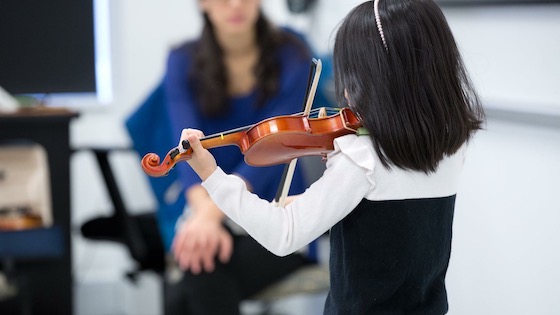
There is a moment every violin teacher knows well. A student arrives for their first lesson, bow in hand, eager to play. And within the first four minutes it becomes clear: the instrument is fighting them. The pegs slip, the strings buzz, the tone is flat and lifeless — no matter how carefully they hold their bow arm. The child didn’t fail. The violin did.

We believe that great teaching begins before a single lesson takes place. It begins with the instrument in your hands. At the heart of our approach is a simple conviction: every student deserves a violin that works with them, not against them. Sourcing the right instrument from a trusted specialist — like Bekker Music, who have been serving South Africa’s string community since 2000 — is one of the most important decisions a family will make on this journey.

The Violin That Teaches Without Speaking

A well-set-up violin is, in itself, an instructional tool. When the action is correct, the strings respond to the lightest bow pressure — giving a student immediate physical feedback that they are doing something right. When the sound post is placed well and the bridge is fitted properly, the instrument resonates across its full range, rewarding good technique with a tone that actually sounds like music.

A poorly made or badly adjusted instrument, by contrast, creates what we call “false negatives” — the student tries correctly, but the violin doesn’t respond. Over time this erodes confidence, corrupts posture as the learner compensates, and — most sadly — makes them believe they are not musical when they are simply under-equipped.

“I have never met a child who couldn’t learn the violin. I have met many children who were handed instruments that made the violin seem impossible.”

This is not about spending a fortune. Entry-level violins from Bekker Music are curated specifically for student playability — set up by a resident luthier who has trained in Italy and spent over two decades serving local players. The difference between a curated entry-level instrument and an anonymous online bargain is not marketing. It is measurable in a child’s progress over the first six months.

Good Strings: The Underrated Game-Changer

If the violin is the engine, strings are the fuel. Old, corroded, or low-quality strings are one of the most common — and most overlooked — barriers to progress we encounter. A set of quality strings costs a fraction of what most families spend on extra lessons, yet the difference in tone, tuning stability, and playability is immediate.

For student players, we recommend strings like the Thomastik Alphayue range — designed specifically for learners, with consistent tension that makes bow control easier to develop. As students advance, graduating to strings like the Dominant series rewards their improved technique with a richer palette of tone colours.

Quick Maintenance Note

Strings should ideally be replaced once a year for regular students, or sooner if they show visible winding damage or lose brightness. After each session, wipe the strings down with a soft cloth to remove rosin build-up — this simple habit extends string life significantly and keeps the instrument sounding its best between lessons. A light application of quality rosin to the bow before practice is equally important; too little and the bow slides, too much and the tone becomes scratchy.


The Home Lesson Advantage — and What It Demands

We are passionate advocates of high-quality at-home music lessons. Teaching in the student’s own environment removes the stress of travel, places the family at the centre of the learning process, and — crucially — allows the teacher to see exactly where and how the student practises. A well-positioned music stand, good lighting, and adequate physical space are not small details. They are the architecture of a productive lesson.

But the home lesson format also raises the bar for one thing: the instrument itself. In a studio setting, a teacher can sometimes compensate for an inadequate instrument by adjusting on the spot, by swapping the student onto a school-owned violin mid-lesson. In the home, the student’s violin is the only violin. If it is not fit for purpose, it will undermine every technique the teacher introduces — posture, bow hold, intonation, tone production — from the very first session.

This is why, when a family books lessons with us, one of our first conversations is always about the instrument. We guide parents through the sizing process (a critical detail for young players — see Bekker Music’s violin range by size), discuss setup and playability, and help them understand what they are really investing in. We also discuss rental options for growing children — a smart, practical solution that Bekker Music offers with instruments that meet our quality standards.

“A great lesson taught on a broken instrument is a lesson half-learned. The right violin turns the home into a concert hall.”

Ready to give your child the right start? We’d love to help you find both the right instrument and the right teacher.

Book a Home Lesson Shop Violins 

Casio Instruments South Africa
Categories General

The Best Digital Piano for Music Lessons at Home

The Best Digital Piano for Music Lessons at Home

Every Musician Begins Somewhere

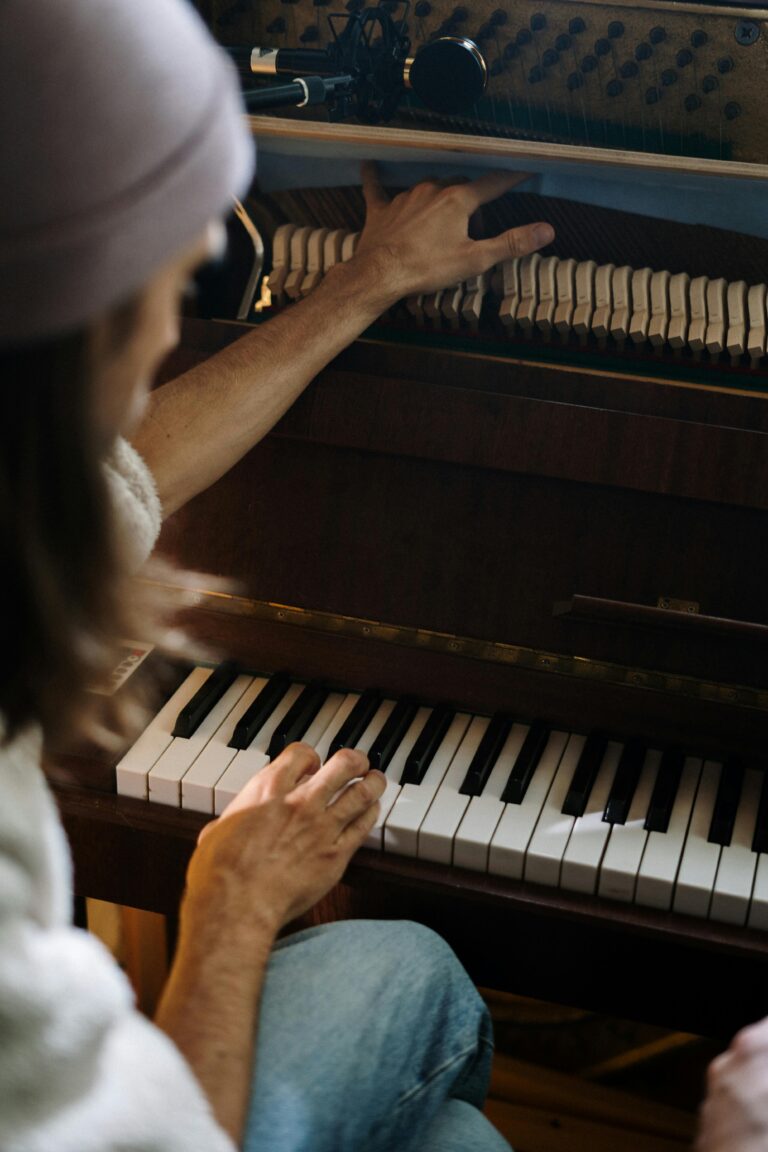
There is a moment every music teacher knows well: a student sits down at a piano for the very first time, places their fingers on the keys, and plays something — anything. It doesn’t matter what comes out. What matters is that something ignites.What happens in the months and years after that moment is shaped by many things — the quality of instruction, the consistency of practice, and yes, the instrument itself. In an era where digital pianos have quietly revolutionised music education, the question is no longer whether a digital instrument is good enough. The question is: which one is right for where you are, and where you want to go?This guide walks through the complete journey: starting with the right beginner keyboard, setting up effective music lessons at home, and knowing exactly when — and how — to upgrade to a professional instrument.

Why Digital Instruments Have Changed Music Education

And why they will continue to change the teaching world

Digital Instruments

For decades, the acoustic piano was considered non-negotiable for serious learning. Real strings. Real hammers. Real resonance. And while the acoustic instrument remains the pinnacle of expression for many players, it carries real-world obstacles that have turned countless aspiring musicians away before they ever reached their potential.

Space-Conscious Design

A quality digital piano occupies a fraction of an upright acoustic’s footprint. For apartments, shared homes, and home studios, this isn’t a luxury — it’s a practical necessity.

Quiet Headphone Practice

Plug in headphones and practise at any hour without disturbing anyone. For students with busy households or close neighbours, this freedom is genuinely transformative

Zero Maintenance Costs

No tuning. No humidity damage. No repairs. A digital piano stays in perfect pitch from day one — freeing your budget entirely for lessons and sheet music.

Built-In Learning Tools

Metronomes, lesson modes, recording functions, and accompaniment rhythms are built right in — turning solo home practice into a structured, interactive experience.

These aren’t small advantages. For anyone setting up music lessons at home — whether as a student, parent, or teacher — these features fundamentally change what is possible day-to-day.


"The best instrument is the one that removes every excuse not to practise."

— A principle held by the world's finest music educators


Featured Section


Taking Music Lessons at Home: Making It Work

Home is where most students do their best learning — or their worst. Here is how to build a genuinely effective home practice environment around a digital piano.

Why Home Is Now the New Music Studio

The rise of flexible lesson scheduling and high-quality digital instruments has made music lessons at home more effective than ever before. Students who practise in a familiar, comfortable space — on their own instrument, at times that suit them — consistently show faster progress than those who rely solely on weekly sessions at an external studio. The key is not just having access to an instrument. It is having the right instrument, set up correctly, in a space that signals clearly to the brain: this is where music happens.

Setting Up Your Home Practice Space

You don’t need a grand studio. You need a corner — and the right Casio keyboard to anchor it. These are the essentials for a home music lesson environment that genuinely delivers:

Starting Strong: The Casio CT-S100

A thoughtfully designed entry-level keyboard giving beginners 61 full-size keys, 60 built-in tones, and an ultra-slim, battery-powered body — the ideal first instrument for home music learners of any age.

  • 61 full-size keys
  • 60 built-in tones
  • Battery or AC powered
  • Ultra-slim, lightweight body
  • Built-in stereo speakers
  • Headphone output
  • Portable for home & travel
  • Ideal for ages 6 and up

    Why the Right Starting Instrument Matters

    There is a persistent myth in music education that beginners don’t need — or don’t deserve — a decent instrument. That they should “prove themselves first.” This thinking is quietly harmful. A poorly weighted, out-of-tune, or cheaply built instrument teaches bad habits: excessive finger pressure, poor tone sensitivity, and a dulled ear that takes months to correct.

    The CT-S100 sidesteps these pitfalls entirely. Its keys are correctly sized, its tones are clean and pleasing, and its portability means a student can practise at home, carry it to a lesson, or take it on a trip. It meets a beginner exactly where they are — curious, enthusiastic, and ready to learn — without standing in the way of genuine progress.


    The Moment You Know They’re Ready to Grow

    Experienced teachers recognise it before students do. There’s a shift — subtle at first — in how a dedicated student relates to their instrument. Their fingers begin to search for dynamic contrast. They want softness in one passage, power in the next. They start to feel frustrated when the keyboard doesn’t respond to how hard or gently they press.

    This is the moment the instrument becomes a ceiling rather than a launchpad. It’s not a failure of the starter keyboard — it did exactly what it was supposed to do. It is a signal of genuine progress, and the student deserves an instrument that can now meet that ambition head-on.


Stepping Up: The Casio AP-200 Celviano

The Casio AP-200 Celviano is a different instrument entirely. Where the CT-S100 removes barriers to entry, the AP-200 removes barriers to excellence. It is a full-sized digital piano built for students who have moved beyond the basics — and for the serious home musicians and teachers who demand more from every session.

What Weighted Keys Actually Change for Home Learners

It’s difficult to overstate the difference that graded hammer-weighted keys make to a developing musician. On an acoustic piano, the keys are heavier in the lower register and lighter in the upper — mimicking the true mechanics of a grand piano hammer striking a string. The AP-200 replicates this graduation precisely.

Finger strength, touch sensitivity, and dynamic control are all learned through resistance. A student who has only practised on unweighted keys will struggle at a recital on an acoustic piano — not because of a lack of talent, but because their hands have never been trained to respond to weight. The AP-200 closes that gap completely, making it the ideal digital piano for home lessons at an intermediate or advanced level.

Sound That Teaches Nuance

The AP-200 uses Casio’s Multi-Dimensional Morphing AiR Sound Source — a system that captures the true character of a concert grand at multiple velocity layers. Press a key gently and you hear a whispered note with natural decay. Strike it firmly and the response is immediate, resonant, and full-bodied. This tonal responsiveness is not a luxury — it is a teaching tool in itself.

Students who practise on a dynamically responsive instrument develop their ear faster. They begin to understand that music is not just a sequence of correct notes — it is a landscape of intention, shaped entirely by how each note is touched.

Duet Mode: The Home Lesson Game-Changer

For teachers running sessions at a student’s home, the AP-200’s duet mode is exceptional. The 88-key keyboard splits into two identical 44-key ranges, allowing teacher and student to sit side by side and play the same notes simultaneously. The teacher demonstrates; the student mirrors in real time on the same instrument. This is one of the most effective techniques in modern piano pedagogy — and it is built right in.


Why the Instrument Defines the Standard of Teaching

Even the most gifted teacher is limited by the tools in the room. A lesson on a poorly maintained, unresponsive instrument is a lesson with one hand tied behind your back. The teacher can describe the feeling of a properly executed legato phrase, but the student cannot feel it if the instrument cannot deliver it.

High-standard music education — the kind that produces lifelong musicians — is built on accurate feedback. Every time a student presses a key, the instrument should tell the truth: about how hard they pressed it, how cleanly they held the phrase, how precisely they released the note. The AP-200 tells that truth faithfully, session after session.

This is also why professional teachers increasingly specify digital instruments for home lesson environments. The consistency is unmatched — no variation between cold mornings and humid afternoons, no detuning between terms, no surprises when the lesson begins. Every session starts exactly where the last one ended.

Ready to Upgrade?

Find the Right Casio Piano for Your Stage

Whether you’re starting music lessons at home for the first time or stepping up to a professional-grade instrument, our full Casio range is available now — with expert guidance to help you choose confidently.

The Full Learning Journey — Mapped Out

Understanding your path as a musician — or the path you’re guiding your student along — removes uncertainty from the process. Here is how the two instruments serve different but equally essential stages of home music learning:

Stage 1 — Discovery (0–12 Months)

The student builds foundational skills: hand position, note reading, simple pieces, and rhythm awareness. The Casio CT-S100 is the ideal companion here. It’s portable enough to always be accessible, simple enough not to overwhelm, and well-built enough to avoid teaching poor technique. At this stage, showing up at the instrument every day matters more than anything else — and the CT-S100 makes that effortless.

Stage 2 — Development (1–3 Years)

The student works on dynamic expression, more complex repertoire, and increasingly refined technique. This is where the limitation of an entry-level keyboard begins to show — and where upgrading to the Casio AP-200 pays enormous dividends. This investment is not in a luxury item; it is in removing a real obstacle to real progress.

Stage 3 — Refinement (3+ Years)

The student is performing, perhaps competing, and practising at a level where every nuance matters. The AP-200’s graded hammer action, high-fidelity sound engine, and responsive dynamics carry a student comfortably through this stage and well into advanced playing. For most home musicians, it will be the only piano they ever need.

Lorem ipsum dolor sit amet, consectetur adipiscing elit. Ut elit tellus, luctus nec ullamcorper mattis, pulvinar dapibus leo.

Why Structure Matters in Music Education
Categories General

How Children Actually Learn Music

How Children Actually Learn Music

And Why Structure Matters when you learn music

Structure Matters

When parents enrol their child in music lessons, the expectation is simple:
“I hope my child learns to play an instrument.”

But learning music is not simply about pressing piano keys or holding a violin correctly. It is about developing a complete musical understanding that includes listening, reading, coordination, discipline, and creativity.

At GHM Music Group, we often explain to parents that music learning happens in layers, not all at once.

Understanding this process helps families support their children better and enjoy the journey.

The First Stage: Curiosity

Every musical journey starts with curiosity.

Children are naturally drawn to sound. A piano becomes a playground of notes, and a violin becomes an exciting new object to explore.

At this stage, the goal of the teacher is not perfection.

It is engagement.

A good teacher helps a child discover that music is something they can interact with. Small successes — playing a simple melody or recognising a rhythm — build confidence.

This stage is where long-term motivation begins.


The Second Stage: Structure

Once curiosity is established, learning requires structure.

Music is a language, and like any language it must be learned in an organised way. Students gradually begin to understand:

  • how to read notes

  • how rhythm works

  • how posture affects sound

  • how technique improves control

Without structure, students often reach a point where they can only play a few songs but cannot progress further.

This is why structured music lessons are important. A clear learning pathway allows students to move forward step by step.


The Third Stage: Discipline

This is where real musical growth begins.

Music is one of the few activities where progress depends on consistent practice and repetition. Students begin to realise that improvement comes from small daily efforts.

At this stage, lessons start developing life skills that extend beyond music:

  • patience

  • focus

  • resilience

  • problem solving

Parents often notice that children who study music become more organised in other areas of life as well.


The Fourth Stage: Expression

Once technique and understanding grow, something wonderful happens.

Students begin to express themselves through music.

They are no longer simply playing notes — they are shaping phrases, controlling tone, and communicating emotion.

This is the moment when music becomes personal.

A child who once struggled to play a scale can now perform a full piece with confidence.

Why the Right Environment Matters

Learning music is not just about the student. The environment matters too.

Students benefit from: personalised one-on-one instruction structured lesson plans progress tracking performance opportunities guidance from experienced teachers Lessons take place in the comfort of the student’s home, creating a relaxed environment where learning becomes part of everyday life.
learn music

The Long-Term Impact of Music Education

The goal of music lessons is not only to produce musicians.

Music education develops qualities that stay with students for life.

Research and experience both show that students who study music often develop stronger:

  • concentration

  • listening skills

  • memory

  • confidence

  • discipline

But perhaps most importantly, they develop a lifelong relationship with music.


The Journey Begins with One Lesson

Every musician starts somewhere.

A single lesson can become the beginning of a journey that lasts for years.

At GHM Music Group, we believe that music education should be structured, supportive, and inspiring.

Because when students learn music the right way, they are not just learning an instrument.


They are learning how to grow.